
About Us and Press

Generations of Love
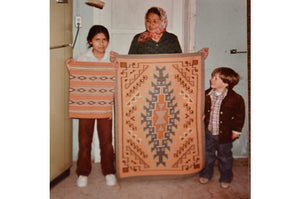
In 1982 we took a photo of Evelyn Yazzie holding a completed weaving. At her side was her granddaughter (holding a smaller weaving of her own) and our son, Sean, who was only 5 at the time.
Steve noticed the similarity in the corner design of the two Navajo Sandpainting Rugs, that previously hadn't hung near each other in the gallery. He then remembered Evelyn's special corner design and pulled that photo from our archives .

The weavings that brought us to this search were important Navajo Sandpainting Textiles that were being displayed for our "Woven Holy People" exhibit last fall. Look at the corners... do you see? They are the same.
The photo we found confirmed our suspicions. Steve remembered that Evelyn told her this corner design had been passed down to her from her mother, and to her mother from her grandmother. She had told us that this was a family design and wasn't shared with other weavers. THAT meant that Evelyn had descended from the weavers who had woven the sandpainting textiles. According to Steve's research, the weaver was the daughter of Miguelito - a very important medicine man, her name was Altnabah.
Today, we received a comment on the original blog post of this story from Evelyn's granddaughter Malinda, the young girl holding her own weaving:
Steve that would be me in the photo, the youngest of Evelyn’s kids. One of my rugs my mom helped me with that I am holding. My mom would have been 92 this year (2017). Miss her very much on this Mother’s Day. I will remember all the days of deadlines and your visits through all the summers of my childhood. Thank you for sharing this photo
We miss her very much too. She was a great friend for many, many years and was an incredibly gifted weaver. Her favorite weavings were the Ganado and Klagetoh style.
The love of a mother to a daughter, and a grandmother to a granddaughter is a bond that is rooted deeply. The generations of love that have shared the gift of weaving with the next, is a blessing to all who have the opportunity to see and appreciate their talent.
Stop by our Master Weavers page to appreciate the Women who have shared their weaving talents.
This Mother's Day, think back to the special women in your family who have shared traditions with you.
Happy Mothers Day
- DeAnne Clifton
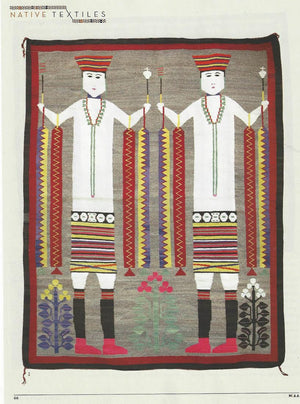

Native American Art - April / May 2017 Featuring Mountainway Dancers
Native American Art • April / May 2017


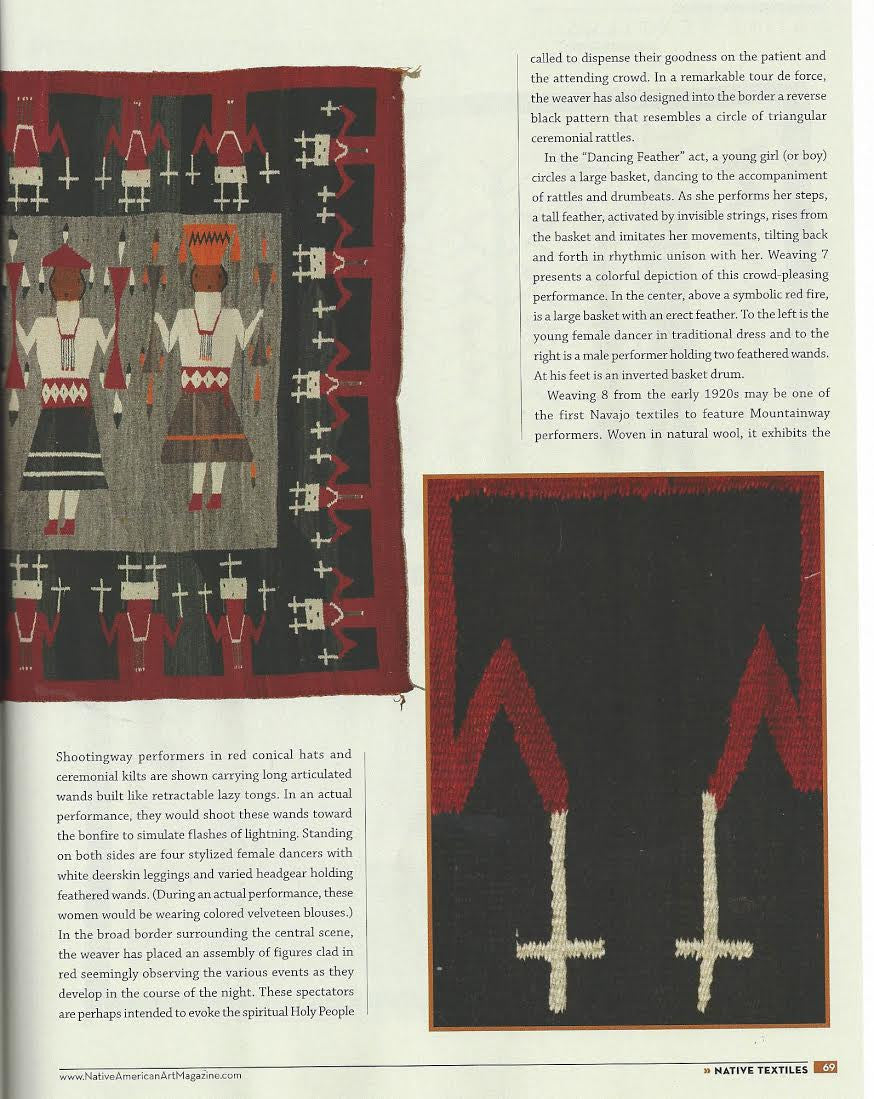
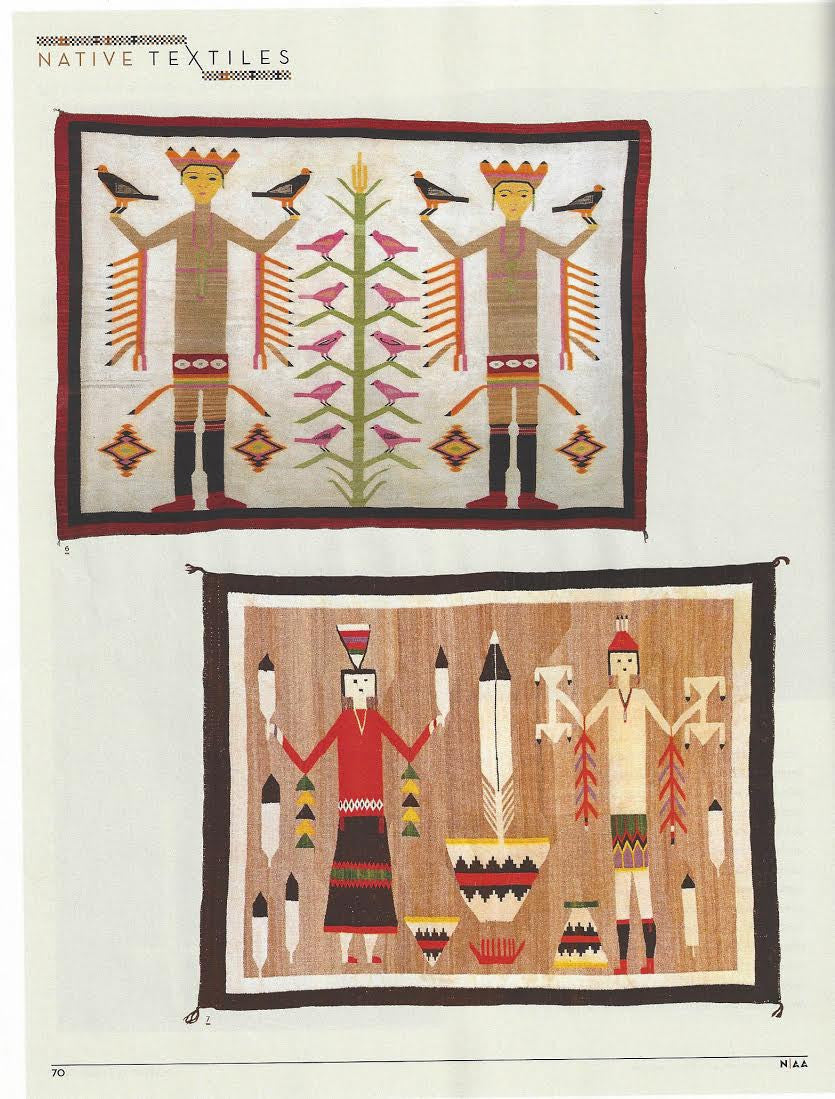

We have typed the words to this article for easier reading. You can read it in full here.
- DeAnne Clifton
- Stichworte: Navajo Rug


London Touts Navajo Weavings!
LONDON FINANCIAL TIMES ARTICLE by Virginia Blackburn : June 14, 2016
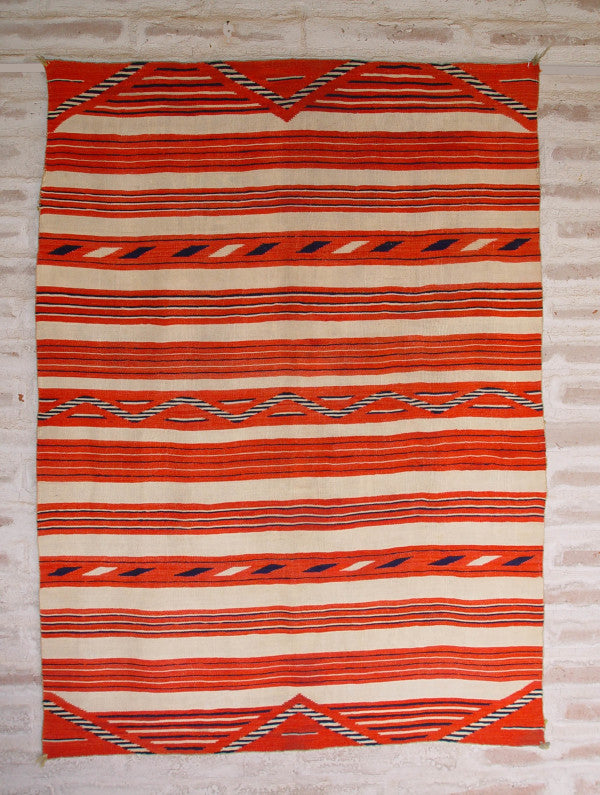
c1870 Historic Navajo Late Classic Serape Museum Quality Governor Axtell's Navajo Blanket $37,500 from Nizhoni Ranch Gallery
Below is an excerpt from the article published in the London Financial Tmes "How to Spend It".....
The striking geometric chief’s blanket hanging in the bedroom of property investor Peter Herfurth’s Tucson home looks surprisingly modern, given that it was created in the 19th century. This Navajo weaving was passed down to Herfurth by his parents, and he has inherited their collecting passion too. “I started buying in 1981 and by 2002 I was an avid collector,” he says. He spends between $5,000 and $180,000 for the best work and owns some 40 pieces, chosen primarily for their design and colour. (some pieces purchased from Nizhoni Ranch Gallery in Sonoita, AZ)**
Today the weavings created by the Navajo people of the southwestern United States are considered some of the most desirable of all Native American textiles. In 2012, California’s John Moran Auctioneers sold a chief’s blanket from the mid-19th century for $1.8m. This represented a considerable leap in prices; until then the very best pieces went for around $650,000-$750,000. But the rarity value, combined with the fact that the bold designs are suited to modern interiors, means that these rugs and blankets are highly sought after.
One UK dealer drawn to the Navajo designs is Cotswolds-based Brian MacDonald. “I sell them when I can find them,” he says, “but good examples are hard to come by outside the US. The last one I sold was a two-tone c1900 rug for £1,000. It was bought by an interior decorator for a London apartment and looked great on the wooden floor.”
A distinction to be made between blankets and rugs…. The blankets were primarily produced for the Navajo themselves and tend to have simple banded designs, whereas the rugs were intended for a wider commercial market and are more complex. The latter were produced in what is known as the “transitional period”, from around 1890 to 1915, and the finest examples sell for between $35,000 and $60,000.
“The rugs came in after trading posts were established,” says Steve Getzwiller, who runs the Nizhoni Ranch Gallery in Sonoita, Arizona. Among his wide range of stock is a c1900-1910 Germantown Storm Pattern rug for $12,500, while a beautiful striped 1870s blanket that once belonged to Samuel Beach Axtell, governor of New Mexico Territory at the time of Billy the Kid, is $45,000.
Another popular area for collectors is rugs dating from about 1900 to 1925, which start at around £5,000. “These are known as ‘dazzlers’,” says Jan E Finch, partner at London-based Finch & Co, a specialist in ethnographic art that sometimes sells Navajo pieces, “as there is a lot of movement and colour in the geometric shapes.”
But not all collectors want to be dazzled. “I look for natural colours of the desert,” says Fred Klein, an attorney based in Frankfurt who fell in love with these textiles while working in the US in the 1980s. “I bought my first one in New Mexico and now have about 35, including several chief’s blankets.” Many of his pieces were bought from Nizhoni Ranch Gallery. “But I’ll have to stop buying now – I’ve run out of wall and floor space.”
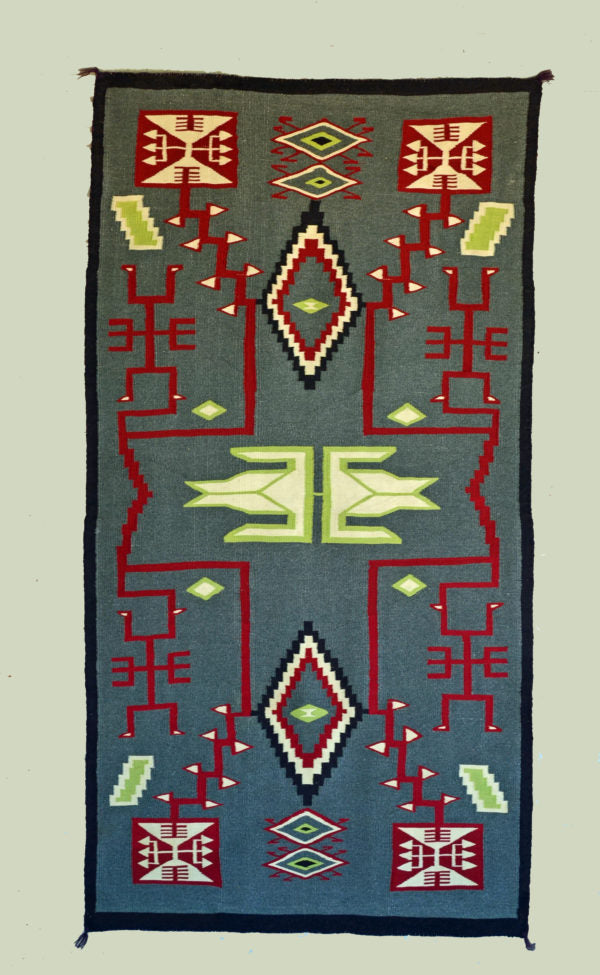
c1900-1910 Germantown Wool Storm Pattern rug, $12,500 from Nizhoni Ranch Gallery
**italic added Back to Nizhoni Ranch News Blog
- fiverr fiver
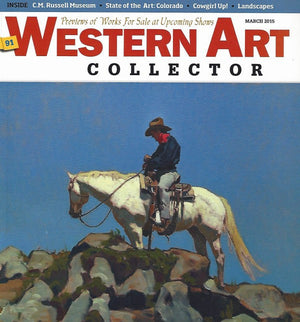

Master Weaver Elsie Bia
We are very excited that one of our Churro Collection Master Weavers was featured as a Focus Artist in the March 2015 edition of Western Art Collector Magazine.
Congratulations to Elsie Bia !!!

Following family traditions
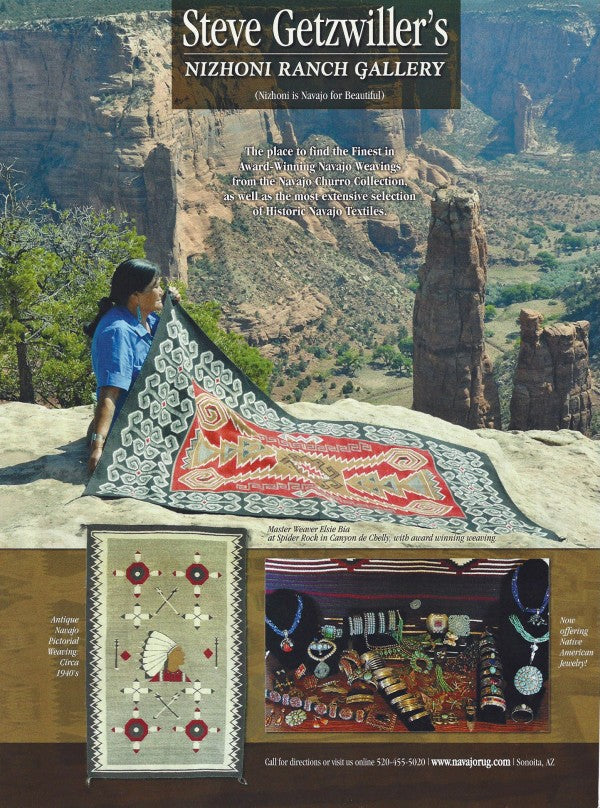
Elsie Bia hails from the Chinle area of the Navajo Reservation and is one of the last of many generations of master weavers. Her family herds sheep on the land overlooking Spider Rock in Canyon de Chelly, among the most sacred places in the center of Navajo country.
The very depth of her work is awe-inspiring. It seems that there is virtually nothing she can’t accomplish geometrically when singing her songs at the loom.
Elsie, an award-winning weaver, learned the tradition and techniques from her grandmother, as most youngsters do. She is in good company, as some of her relatives are also famous weavers; Ruth Ann Tracy, Irene Bia, Helen Bia, Ellen and Lucy Begay. The talent of this family is apparent in the design and tightness of the weave, often complex – always elegant.
Elsie carries on the 400-year tradition and artwork of the Navajo and recently joined the famous Navajo Churro Collection Legacy. Elsie’s Churro Collection weavings are featured at the Nizhoni Ranch Gallery in Sonoita, Arizona.
Navajo weavings have been made on the same traditional upright loom throughout history. The continuous warp is wrapped by hand on the upright loom, and the design, or weft, is meticulously laid in by hand. The designs magically emerge with color and symmetry, one strand of wool at a time. Elsie’s weavings are some of the finest examples you will see today. They display beautifully on the wall and would last for decades on the floor.
Click here to view more of Elsie Bia's Weavings
Click here to go back to blog Nizhoni Ranch News
- fiverr fiver


3rd Phase Chief Blanket Bedspread ARCHITECTURAL DIGEST CELEBRITY STYLE
Looking through our blog archives, I found this old post that had lost it's image (very frustrating). I did some research and found the missing photo. So here it is again. We think this is a great idea for a bed spread!!!
Working with David Piscuskas of 1100 Architect, author and photographer Kelly Klein uses an historic Navajo 3rd Phase Chief’s Blanket in her bedroom as a Bed Spread. Now this gives this bedroom some history and connection to the earth, with the ocean view just outside the window.
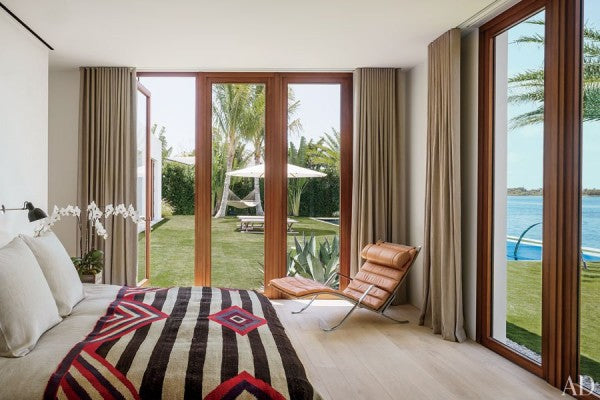
Read the full article here: ARCHITECTURAL DIGEST – CELEBRITY STYLE
"I’ve become more of a minimalist, and I’ve learned that from Calvin,” Kelly says, referring to her marriage to fashion icon Calvin Klein as well as her years working in his design studio." AD Click the photo above for more photos of Kelly Klein's getaway.
- fiverr fiver


Nizhoni means Beautiful
Indian Paintbrush Wild Flowers In the Pasture At Nizhoni Ranch Gallery. Growing wild at Nizhoni, a very special treat, since this plant has often been used as a natural dye by the Navajo in their Navajo Rugs. They would gather it and use a family tested recipe to turn it into a beautiful dye. Steve and Gail chose a fitting name for our Gallery. Nizhoni means Beautiful in the Navajo language. The spring rains have brought out the color in our high desert landscape. We thought you might enjoy a few glamour shots!

The view from our office window can't get much better !


- Beth Barth


