IMMER versandkostenfrei in den USA !!

Educational Articles

RSS
How to Care for Your Navajo Weaving

How to Care for Your Navajo Weaving

How to Clean a Navajo Rug
As both a work of art and a functional piece of décor, it’s essential that you maintain your American Indian textile with proper care and attentiveness. That’s why we want to give you a comprehensive list of ways to clean your Navajo Rug to extend its life and quality.

Basic and Extended Cleaning
Here are just a few things you should remember for proper care of your Navajo

√  Avoid machine washing, steam cleaning or ironing.
√  Never “whip” or use a beater bar on Navajo textiles.
√  Do use a smooth floor attachment to vacuum your rug by hand.
√  Turn and or rotate the weaving from time to time to help with even wear.

If your weaving does need an overall cleaning, you can use a foam rug cleaner for wool rugs offered by Woolite.  To remove minor stains, OxiClean has a good stain remover. We have been known to use white wine to blot out red wine (and then sometimes to finish it off with a little OxiClean)

Safe, Bug-Free Storage
If you own multiple Navajo textiles and routinely swap them out for décor changes or to maintain their quality, it’s important that they are stored properly. As such, there are several methods you should use to protect your wool from sunlight, moths, or moisture. These include:


  • Rolling rugs in the direction of the warp threads.
  • If folding, also fold in the direction of the warp for the first folds to prevent creasing.
  • For museum storage you can also use acid-free tissue paper or unbleached muslin while rolling.
  • Textiles can be placed in a cedar chest or any chest or cabinet can work with added cedar chips or herbs (such as lavender) to ward off moths.


Avoiding Sunlight
Direct sunlight can fade the colors in your Navajo weaving. We recommend using a UV treated window or film on windows to reduce (in some cases eliminate) sun damage. When placing Navajo rugs in or around your home, try to avoid direct raw sunlight, spots of light shining in through windows, or broken illumination. Also, rotate your rug regularly to keep colors and fabrics balanced.

Hanging Instructions
Apply Velcro to a thin piece of wooden lathe about ¼” thick and 2-3” wide; the length of lathe should be just shy of the length of your weaving. Tack the wooden lathe to the wall with small nails for proper security.

You may also keep the sticky back on the Velcro and tack the full strip to the wall, but you may need a few more small nails for this process. Then simply press the weaving to the Velcro. This method works well when hanging a weaving on a curved surface or around a corner. 

Both methods make it easy to vacuum or rotate the weaving. We recommend 2-3 times per year.

Note: Historic weavings may need an additional strip of Velcro sewn to the Weaving, so it can adhere to the Velcro on the wall.

To see all of our Native American Collections click here

  • Beth Barth
Navajo Style in Interior Design

Navajo Style in Interior Design

Navajo Style in Interior Design

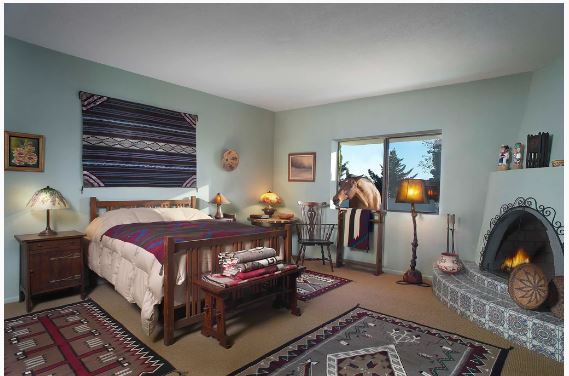
Navajo rugs Interior designRalph Lauren graces the cover of Architectural Digest and House Beautiful, and shows the whimsical way he uses Navajo weavings to grace and embrace his home, using them as rugs on the floor, wall hangings, and across the back of a couch or chair.

Top designers of today recognize the elegant beauty of the Navajo weaving and incorporate them into homes they design.  Joe Nye, named one of the top designers by Architectural Digest said of one home, "The Navajo weavings were the thread that pulled everything together.  They helped make the statement I was looking for."

Tamara Hawkinson designer and freelance writer, featured the Getzwiller's home in the 'Legends of the West' section of "The Desert Home".  Steve Getzwiller is an authority on Navajo weaving and even penned a book on the subject, 'The Fine Art of Navajo Weaving'.

"The Arts & Crafts furnishings blend easily with the Steve and Gail Getzwiller's Native American pots, baskets, and other artifacts.  Yet it is the colors and patterns of the Navajo rugs - some on the floor and others hanging on the walls that define the space." Tamara Hawkinson.  

Navajo rugs Interior design"People are interested in the rugs' decorative qualities, aesthetic value and emotional connection to the life and traditions of a distinct and fascinating culture" says David Roche, Sotheby's specialist in American Indian Art (now Director of the Heard Museum Phoenix Arizona), "There's an excitement to these textiles and a universal quality."

Navajo Weavings are also in demand for the value they represent today, yesterday, and in the future.  They sell at increasing values in auctions around the country, such as Sotheby's. "Navajo weavings will always have value, both monetary and aesthetic." says Steve Getzwiller.


The Nizhoni Ranch Gallery also offers Navajo weavings for sale by appointment at the Nizhoni Ranch Gallery in Sonoita Arizona, just south of Tucson.  Nizhoni is the place to see beautiful things. --Mickie Stevens


Design with A Southwest Focus

Navajo Rug Interior DesignOne of the most important things to consider when designing with Southwest area rugs is that different rug designs look wonderful when mixed together. With their bold, geometric designs, you might first assume that Southwest area rugs would "clash" with one another. Instead, Navajo rugs and weavings look warm and beautiful when used in multiples.

Picture a large, rustic living room with a hardwood or even a stone floor. Imagine several Southwest area rugs in different designs scattered across the floor for warmth and beauty, and another hand-woven Navajo rug hung on the wall. A room like this is the perfect backdrop for every type of activity, from family game nights to romantic evenings in front of the fire. It's also an ideal setting for housing other art works, from stained glass to sculpture to other Navajo pieces such as basketry or pottery. Navajo rugs and other weavings offer qualities few other design items can match. They are timeless and durable. They are tranquil and even spiritual. Plus, well-made rugs usually appreciate in value over time, making them excellent family heirlooms. They are an investment you can enjoy from the moment they arrive in your home.  


Interior Design Elegance

Navajo Indian rugs create a great decorative "balance." For example, woven Navajo pieces feature a masculine geometry, balanced by a feminine intricacy. Navajo rugs often use deep, rich colors that balance earthy warmth with understated reserve. Finally, Navajo rug designs and hues offer the perfect balance of playfulness with gravity. Lively yet dignified; warm yet serene; masculine yet feminine--is it any wonder these versatile rugs create such a sense of tranquility and harmony? That is what the Navajo are all about harmony, balance is one of the desired states and their ceremonies are designed to bring balance and harmony to all participants.


Navajo rugs and wall hangings look amazing in a variety of spaces and alongside numerous decorative styles, but they look especially beautiful when paired with other earthy, natural materials. For instance, a hand-woven Navajo rug would look terrific near a leather couch. A rich, luxurious shade of chocolate, tobacco, or cognac leather would work beautifully with the deep reds, grays, and blues of traditionally styled Navajo Indian rugs.


In addition to leather, Navajo rugs look fabulous against wood, stone, or brick. Architects like Frank Lloyd Wright and design movements like the American Arts and Crafts movement relied heavily on Native American designs and materials. Today, Navajo weavings can make everything from a stark office to a stone, stained glass and wood living room look simultaneously more important, warm, and inviting. Adding just a single piece to your home or office will add great beauty; decorating with multiple pieces will absolutely transform the space.

Navajo Rug Interior Design

Interior Design Services

Steve and Gail Getzwiller have helped many clients with interior design ideas using Navajo rugs and other Native American art forms. They are experts in making all elements in a room balance. Both have a great respect for negative space, which also shows in the Navajo weavings Steve designs. Their own home is a masterpiece of interior design, which has been featured on Home and Garden Television's "Homes Across America." It features Navajo weavings, including historic, Churro, and "The Next Phase Blankets"; Arts and Crafts furnishings; and more. It is beautifully balanced, historically significant, and spiritually uplifting all at the same time.


Steve has been known to load his vehicle up with rugs and baskets and travel to a client's home, whether that's in Montana, Wyoming, Colorado, Nevada, California, or elsewhere. Once there, he will assess the home's strengths and then try different weavings and accent pieces in place, all to make a very beautiful and comfortable living space. This is always fun, as the possibilities are vast. Plus, having the opportunity to try different looks in your home is an adventure in itself!


There are a limited number of rugs posted on the website, so please contact us to let us know what you're looking for in a piece and we can send you images of available weavings. All weavings have a 100% satisfaction guarantee.


Of course, you are invited to come to Sonoita in person and have our full inventory at your disposal and the opportunity to see and hold these historic/antique and contemporary rugs. The gallery is uniquely set up in a home setting you you can see what pieces will look in a home and inspire you with design ideas!

Navajo Rug Interior DesignNavajo Rug Interior DesignNavajo Rug Interior DesignNavajo Rug Interior DesignNavajo Rug Interior DesignNavajo Rug Interior DesignNavajo Rug Interior DesignNavajo Rug Interior DesignNavajo Rug Interior DesignNavajo Rug Interior DesignNavajo Rug Interior DesignNavajo Rug Interior DesignNavajo Rug Interior DesignNavajo Rug Interior DesignNavajo Rug Interior DesignNavajo Rug Interior DesignNavajo Rug Interior DesignNavajo Rug Interior DesignNavajo Rug Interior DesignNavajo Rug Interior DesignNavajo Rug Interior DesignNavajo Rug Interior DesignNavajo Rug Interior DesignNavajo Rug Interior DesignNavajo Rug Interior DesignNavajo Rug Interior DesignNavajo Rug Interior DesignNavajo Rug Interior DesignNavajo Rug Interior DesignNavajo Rug Interior Design
  • Beth Barth
Deliberate Imperfections?

Deliberate Imperfections?

Intentional Flaw?  Deliberate Mistake?  Perfectly Imperfect?

Recently a new collector inquired about how much would a weavings value and collectability be diminished if the weaver made a mistake in the mirror image of the design.  The answer is zero.

Navajo are deeply religious.  They believe nothing is perfect, except for the Gods.  They were given the gift of weaving by the Gods and taught by Spiderwoman herself - an important deity to the Navajo.  To honor the Gods, Navajo weavers deliberately incorporate an imperfection. 

Often times one must closely study weavings to find the deliberate mistake. Here at the gallery we enjoy looking for and finding the change up in the design. Even our eyes we miss them sometimes.  It becomes a bit of a game.  Some weavings may only have one, others have a few.  When we find a weaving with several flaws we imagine the weaver may have been overly superstitious and wanted to ensure the Gods would be pleased and no bad luck would follow.

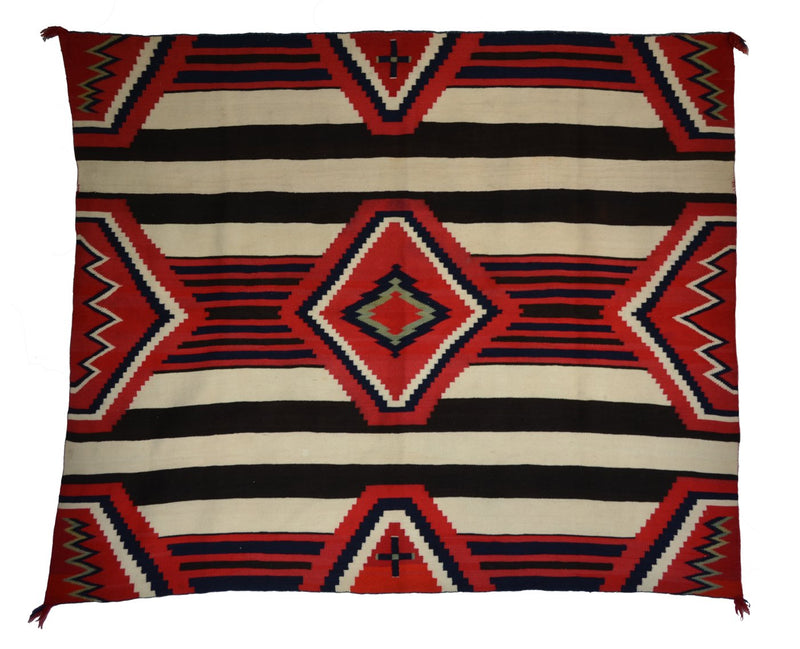
Some of the most important pieces collected have fairly obvious deliberate imperfections.  One example is the 3rd Phase Chief Blanket which is on the front cover of Navajo Textiles by Nancy J. Blomberg.  That 3rd Phase is part of the William Randolph Hearst Collection.  Without working too hard we came up with 7 imperfections in the design.  


Here is a weaving that we currently have available.  Can you find an imperfection?   At the bottom we will share what we have found.  Warning - this is a tough one but give it a shot.

 J
JB Moore Navajo Rug : Historic : PC 104


There is another deliberate imperfection called the Spirit Line or Spirit Pathway.  Navajo believe that when weaving a rug, the weaver entwines part of her or his  spirit into the rug.  The spirit line prevents the weavers spirit from being trapped and allows weaver's spirit to safely exit the rug.  Spirit Lines are found in rugs with a border - however not all bordered rugs have spirit lines.  It is up to the weaver as to how they will incorporate their personal deliberate imperfection.  Look to the top right corner of the weaving below for the Spirit Line.

 
Navajo Double Saddle Blanket : Historic : PC 83


Not a surprise we adore Navajo weavings and are honored we can share our collections with the world.  While we have been in this business for more than half of a century there is still much to learn about Navajo weaving, past and present.  Without a doubt Navajo have been given the gift of weaving by the Gods and for that we cannot be more thankful.


Here is the answer from the challenge above.  


 Here are a few more to try.  Enjoy!


Crystal Navajo Rug : Historic : GHT 2262

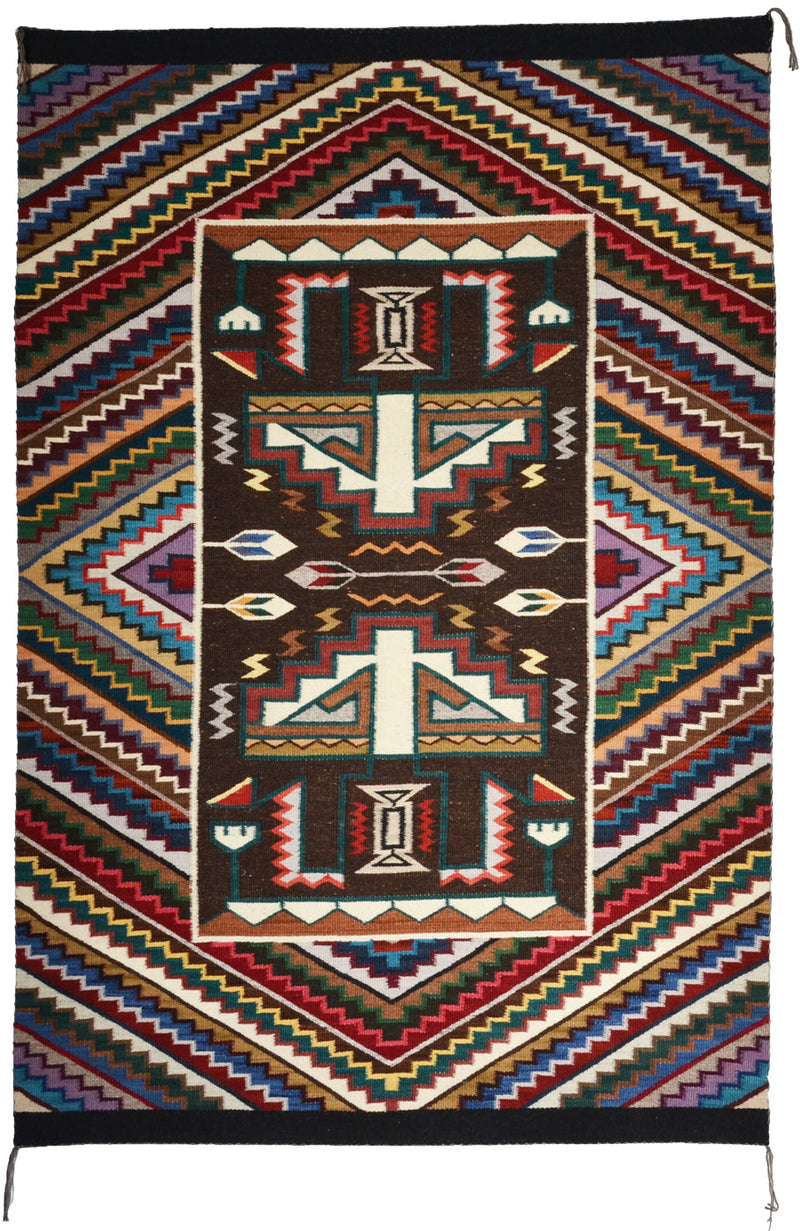
Teec Nos Pos Navajo Weaving : Historic : PC 88


  • Beth Barth
Spider Woman and Spider Rock - Deity Who Taught the Navajo how to Weave - and more!

Spider Woman and Spider Rock - Deity Who Taught the Navajo how to Weave - and more!

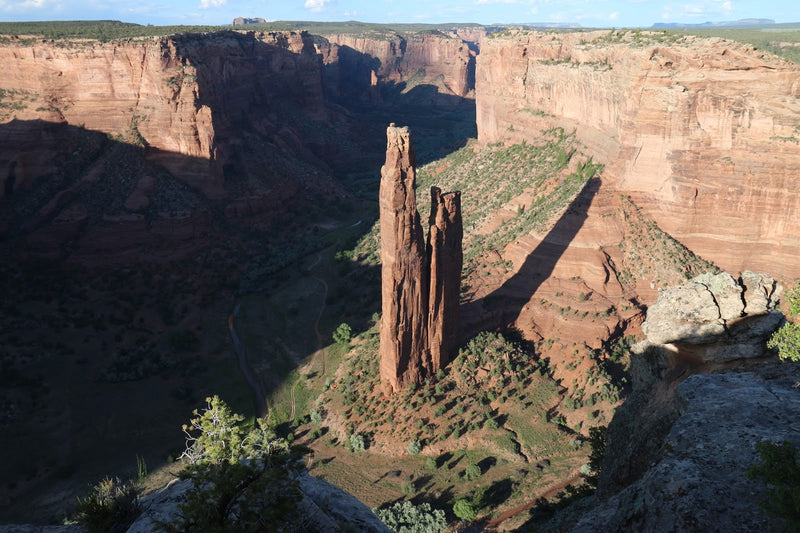
Sacred Spider Rock, Canyon De Chelly,  Navajo Nation

Spider Woman and Spider Rock 

According to Navajo legend, Spider Woman lives at the top of Spider Rock, a 750 foot spire in Canyon De Chelly.  She was first to weave the web of the universe. She taught the Navajo women how to use a loom - made of sunlight, lighting and rain to create blankets and rugs, bringing both functionality and sacred art to the people (Diné).  By sharing the gift of weaving she showed Navajo weavers how to create beauty in their own life and to spread the "Beauty Way" teaching of balance within the mind, body & soul (hózhó). On the other hand Spider Woman has a bit of a dark side. But let's start off with the bright.

In the Navajo creation story, the first world was small and pitch black. There were four seas and an island. In the very middle of the island was a single pine tree. Ants, dragonflies, locusts and beetles lived there and made up the Air-Spirit People of the first world.

The second world was known as the Blue world, where life was given to Spider Woman & Spider Man. Only their inner spirits or souls were made. Their physical bodies were made later to contain their spirits when they evolved into future worlds.

In the third, known as the Yellow world the holy ones advised Spider Woman that she had the capabilities of weaving a map of the universe and the geometrical patterns of the spirit beings in the night sky.  At first she did not know what they meant, and was not told how it could be done. Curiosity became her energy and driving force to learn to weave as the holy ones instructed.

On a beautiful day when she was out on the land, exploring and gathering food, she came upon a small young tree. She touched it with her right hand and wrapped her fingers around one of its branches. As she was letting go, a string streamed out the center of her palm and wrapped around the tree branch. She was not quite sure what the string was. At first she shook her hand to release the string, but it would not break free. She thought if she kept wrapping the string around the branch it might let go.  

Spider Woman started maneuvering and manipulating the string into various shapes. At this particular moment, she knew this was the weaving the holy people instructed her to do. Immediately she broke the string with her left hand without hesitation. She sat and thought carefully about how to use her new gift. For the rest of the day she sat close to the tree and wrapped the string into various patterns on other branches of the small tree.

The holy ones heard about Spider Woman's new talent and came to visit her. During the visit the holy ones instructed Spider Man to construct a weaving loom and also create the tools used in the various processes of weaving. At this time Spider Woman began to sing the weaving songs, given to her by the holy ones. The songs empower the weavings and the weaving tools.

Dine (Navajo) of today live in the fourth world, known as the "Glittering World". Young weavers are instructed to find a spider web in the early morning, glistening with sunlight and sparkles. They are told to place the palm of their right hand upon the spider's webbing without destroying or damaging the web. At that moment Spider Woman's gift of weaving enters the young weaver's spirit, where it lives forever. 

Spider Woman's dark side.  Navajo elders warn young children that Spider Woman is always on the look out for mischievous and disobedient children. When she finds them, she spins them tight with her web and takes them to the top of Spider Rock. There she boils and eats them. Their left over bones melt in the sun which create the white bands at the very top of Spider Rock. Yikes. Kids, be on your best behavior!   

Cara Gorman Spider Rock Navajo Rug Master Weaver Nizhoni Rnach Gallery
Cara Gorman,  Master Navajo Weaver, close enough to Spider Rock to see the white bands 

Elsie Bia Nizhoni Ranch Gallery Navajo Rug
Elsie Bia,  Master Navajo Weaver, near Spider Rock


  • Beth Barth