Churro Sheep History
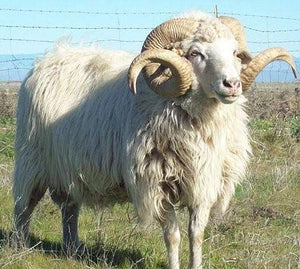

The Churro breed of sheep was introduced into the Rio Grande Valley by the Spaniards around 16th century and were obtained by the Navajos through raiding and trading. The lustrous fibers of Churro Wool are long and straight with a very low lanolin content, making them ideal for the limited hand methods of Navajo weaving. If you were to look at the Churro wool fiber under a microscope, it is actually translucent.
For the Navajo weaver, historically one of the best parts of using Churro wool was less work to raise the sheep and prepare the wool. The Churro Sheep are very hardy and well adapted to the harsh dry conditions under which the Navajo live and the low lanolin content means very clean wool (not a lot of water or time used to clean it). The historic superiority of weavings produced from the wool of Churro sheep is very apparent in the blankets that have survived through time.
The common Diné (Navajo) word for the breed, Dibé dits’ozí, means "long fleeced sheep." T’áá Dibé is also occasionally used, meaning "first sheep. The churro is important to Diné subsistence and culture.
History
The Spanish Churra (renamed Churro by American frontiersmen) was first imported to North America in 1598 by Juan de Oñate, a conquistador who established the colony of New Mexico for Spain. He used Churro Sheep to feed Spanish armies and settlers. By the 17th century, Churros were popular with the Spanish settlers in the upper Rio Grande Valley. The Churro soon became an important part of the Diné economy and culture. The Navajo bred sheep to adapt to a pastoral lifestyle in a harsh desert environment.
During the Navajo Wars, American soldier Kit Carson instructed his troops to destroy Navajo crops and kill their livestock, including the Churro sheep, in 1863. They killed thousands of sheep. Some small clusters in remote canyons survived the attack. The entire Navajo nation was then forced to march to a reservation. The Navajo nation and the US government signed Treaty of Bosque Redondo in 1868, allowing the Navajo to return to their homeland. As part of the agreement, the US government provided sheep to the Navajo; however, these breeds were unfamiliar and contaminated the Churro sheep line.
In the 1930s, the US government implemented the Navajo Livestock Reduction, intended to reduce the amount of sheep and horses on Diné lands. Tens of thousands of Churro sheep were slaughtered, and their numbers dwindled. The Livestock Conservancy estimated that less than 450 Churros remained by the 1970s. This reduction of the flocks drove many Diné ranchers into poverty. Many Diné who had traditionally lived off of the land and agriculture turned to wage work.
Restoration of the breed began in the 1970s when breeders began acquiring Churro phenotypes with the purpose of preserving the breed and revitalizing Diné and Hispanic flocks. The Navajo Sheep Project, headed by Lyle McNeal, was the first organization to start a breeding program.
While the Navajo-Churro breed is no longer in danger of extinction, it is still considered a rare breed. There were over 8,000 head of Navajo-Churro sheep in 2022.
Cultural role
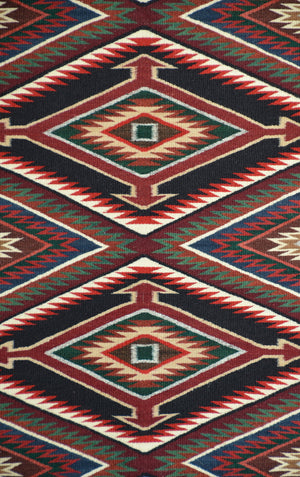
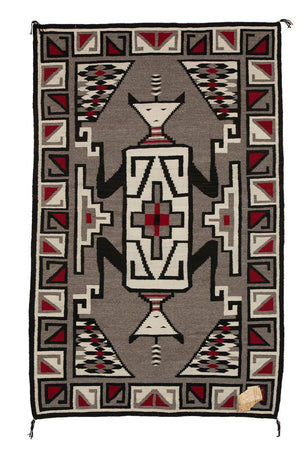
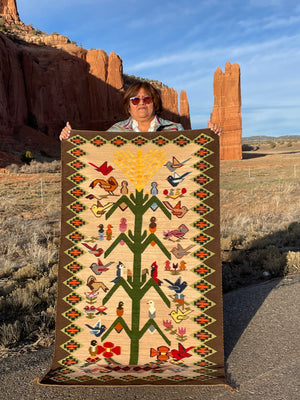
Diné weavers have used Churro wool to make rugs, wall hangings, and other products since the late 1600s. The sheep naturally produce wool in fourteen colors, so weavers can produce complex colorwork without needing to dye the wool. The yarn produced from the wool is durable, coarse, and non-pilling. Many Diné through the early 20th century made their livelihood in farming and ranching. Woven products, such as rugs and blankets, were and continue to be important exports.
Carding wool, spinning yarn, and weaving are traditionally women's work among the Diné. As such, flocks of sheep traditionally belonged to women and were passed from a mother to her children. Children learned to tend the sheep at a young age.
The specific Churro breed, as opposed to sheep in general, is an important part of Diné cultural identity. Elders in particular remembered the Churro flocks from the early 20th century. Some were overjoyed to see the revitalization from the 1970s onward:
I said, "Why are you crying for grandpa?" He said, "It's been a long time since I've seen these sheep. I'm so happy that they're here again."
Excerpted from an article printed in the June issue of Phoenix 2016 Home and Garden.
The Churro breed of sheep were introduced by the Spaniards in the mid 1500’s upon their discovery and colonization of the “New World”. Having originated in the mountainous regions of southern Spain, they were well adapted to the arid and poor forage conditions of this new environment. Twice on the brink of extinction, this hardy breed of sheep endures. In 1863, the Kit Carson/U.S. Military campaign to incarcerate the Navajo people and destroy their economy {the sheep} was successful in rounding up about half of the population, taking them to Bosque Redondo and killing a large percentage of their sheep. The escaping Navajo went into hiding with the remnants of their flocks. Upon returning from “The Long Walk”, they were issued new breeds of sheep, which for the most part replaced the Churro wool in their weaving. Some weaver’s preference for their “old wool” persisted, and many managed to rebuild their Churro flocks. Later, in the 1930’s, Congress enacted the Taylor Grazing Act; tens of thousands of sheep were killed. This federally enforced stock reduction program was the result of overgrazing and the severe drought conditions of the dust bowl era. Still a few bands of Churro survived, secreted away in the remote canyons of Navajo land.
Navajo weavers first used Churro wool during the classic period of Navajo weaving (1700-1863). The superior quality of these weavings is very evident in the blankets that have survived through time. The lustrous fibers of the wool were long and straight, ideal for the limited hand methods of Navajo weaving. Also, the low lanolin content reduced the necessity for extensive cleaning in a land of little water.
In recent years, the efforts of a few dedicated breeders have revived the Churro genetics and fleece quality. However, the circle was not complete, as the wool wasn’t getting into the hands of Navajo weavers. The most successful effort to reintroduce Churro wool to the Navajo loom was accomplished by native Arizonan, Steve Getzwiller. He set out to revive some of the older design elements as well as some rare and natural dyes. The reintroduction of Churro wool brought those lustrous qualities back to the finished weavings, completing the circle and reconnecting some of the weavers with their past. “The Navajo Churro Collection” was born.
- Beth Barth