
Excerpted from exhibit brochure forward written by Alyssa Travis, Associate Curator of the Tucson Desert Art Museum.
"Besides a handful of outstanding contemporary weavings by master weavers Elsie Bia, Selena Yazzi, Cecelia Nes, and GHardy, the works in this collection were woven between the 1870s and 1940s. In many ways, these works were ahead of their time and resemble the works of color field painters, op artists, hard-edge painters, and to a lesser extent, the minimalists of the the mid-1900s. For instance, many of the pieces in this exhibition resemble color field paintings by artists like Kenneth Noland, Frank Stella, Mark Rothko, and Morris Louis. In these works, large areas of color become the subject of the work rather than any objective context. As another example, many of the exhibition's serapes and transitional blankets wit their Mexican Saltillo-style serrated diamonds and vibrant colored yarns create eye-popping effects worthy of the psychedelic-inspired 1960s Op Art movement."
Moderne Kunst Navajo Teppiche Ausstellung
Germantown Serape Navajo Weaving : Historic : GHT 783 : 57" x 74" : (4'9" x 6'2")
Germantown
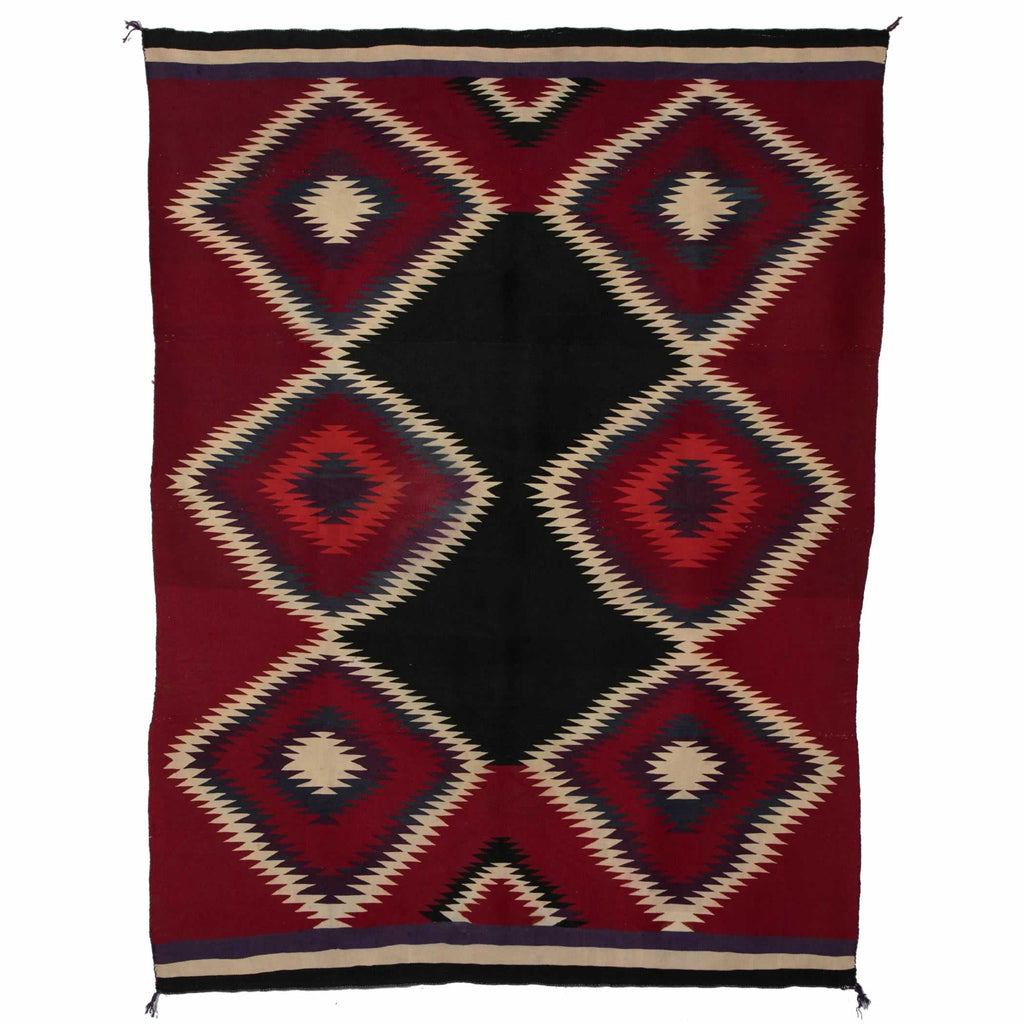
Germantown Serape Navajo Weaving : Historic : GHT 783 : 57" x 74" : (4'9" x 6'2")
$ 12,500.00
This historic Germantown serape is a 57" x 74" weaving from around 1900, woven with premium 4-ply Germantown yarns on an outdoor upright loom. The tight, precise weaving showcases the artist's skill, while the design blends Hispanic and Navajo influences. A significant textile that celebrates cultural exchange and artistic innovation. This beaut...
Germantown Optical Navajo Weaving : Historic : GHT 2203 : 49 1/2″ x 68″ (4'1.5" x 5'8")
Germantown
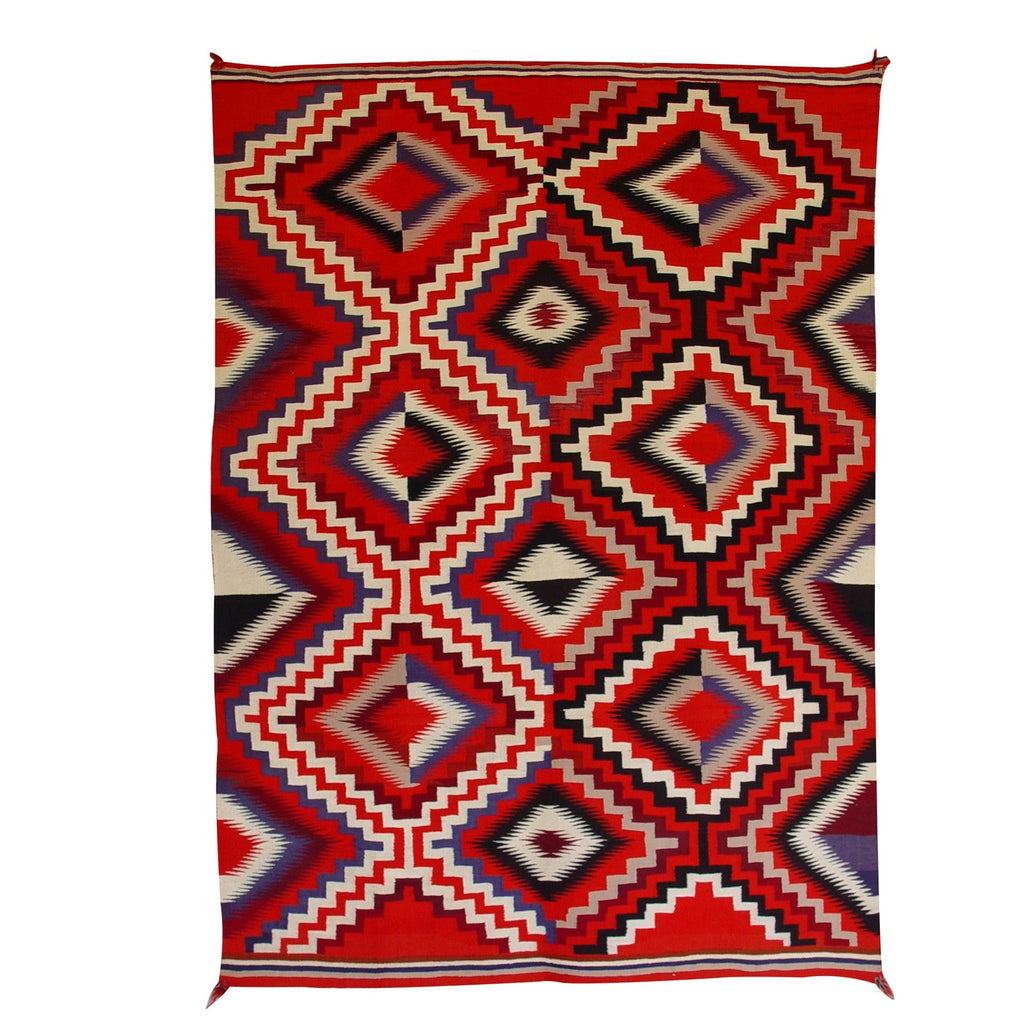
Germantown Optical Navajo Weaving : Historic : GHT 2203 : 49 1/2″ x 68″ (4'1.5" x 5'8")
$ 33,000.00
Germantown Navajo Rug. Germantown yarn (from Germantown Pennsylvania area) was first introduced to the Navajo at Bosque Redondo, so the women would have some material to weave their highly prized rugs. The Navajo Indians were allowed to return to their reservation (1868), where the weavers continued to use the popular Germantown yarns because t...


